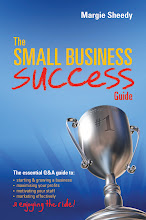
There's a lot of hype about social media, and you shouldn't underestimate its relevance for small businesses. I've just listened to an interesting webinar from Trump University, and it's brought home some of the social media strategies I speak about in my book, The Small Business Success Guide.
Firstly, there's no point as a small business owner saying that social media isn't for your business if you've never checked it out. Ask people you know, including your clients, about the sort of social media they use. Then have a play yourself and start nurturing online relationships with people, who may in the future pay for your product or service.
Give them information or updates on what you're up to. Make it interesting and relevant. "It's how business is being done," says Michelle Gamble of Marketing Angels. "It's quick, it's targeted, it's instantly measurable and it's free."
A great one to look at, which is also featured in The Small Business Success Guide, is Sydney's Mumu Grill. Owner Craig Macindoe has set a cracking pace in his online presence, and it's reaping the rewards. In fact, he says his business is "up 30 to 40 per cent on last year, and at least half of that is due to social media".
You can alwyas take a small business friend along for the ride. Social media and marketing expert John Jantsch of Duct Tape Marketing says you can create a blog and then get a group of similar professionals to join forces and share their expertise.
In The Small Business Success Guide, he talks about a plumber, electrician, lawn-mowing service and heating and cooling company who would make a killer home tips blogging team.
Who'd be on your team?
Margie
Thursday, March 25, 2010


Tuesday, March 16, 2010
When should I expand my business?
Somehow, "bigger is better" has become the accepted measure of small business success. If you're not growing, surely you must be doing something wrong?
But just remember that success is absolutely in the eyes of the beholder. And while the mythical Land of Lots of Opportunities is an exciting place, it's often not all it's cracked up to be.
So be prepared. "If you want to get bigger, make sure it is the best outcome for your business," says Dr Graham Godbee of the Macquarie Graduate School of Management. Think about any growth and the implications it's going to have for you and your business. How does expanding your business fit in with your business goals?
"If you decide the time is right, make the growth sensible and controlled," states Godbee in Chapter 43 of The Small Business Success Guide.
Take the time to consider exactly how your business is going to expand: is it a new team member, new premises, new production capabilities?
As Kathryn Conder, partner of executive and business mentoring firm Carnegie Management Group, adds in The Small Business Success Guide: "Companies that expand successfully have done the planning and are prepared to work hard.
"If you haven't spent the time forecasting and costing your plan, and considering the whole process, don't grow."
Wise advice!
Margie
But just remember that success is absolutely in the eyes of the beholder. And while the mythical Land of Lots of Opportunities is an exciting place, it's often not all it's cracked up to be.
So be prepared. "If you want to get bigger, make sure it is the best outcome for your business," says Dr Graham Godbee of the Macquarie Graduate School of Management. Think about any growth and the implications it's going to have for you and your business. How does expanding your business fit in with your business goals?
"If you decide the time is right, make the growth sensible and controlled," states Godbee in Chapter 43 of The Small Business Success Guide.
Take the time to consider exactly how your business is going to expand: is it a new team member, new premises, new production capabilities?
As Kathryn Conder, partner of executive and business mentoring firm Carnegie Management Group, adds in The Small Business Success Guide: "Companies that expand successfully have done the planning and are prepared to work hard.
"If you haven't spent the time forecasting and costing your plan, and considering the whole process, don't grow."
Wise advice!
Margie
Wednesday, March 10, 2010
Training your staff
Staff training is something a lot of small businesses don't do, often because of a lack of either finance or time. But if your business doesn't invest in its people, no matter how small your team, you can be sure they're not going to be loyal to you.
"Positive social interaction is core to peoples' work value and identity," says Professor Ian Williamson of Melbourne Business School, in Chapter 21 of The Small Business Success Guide.
"Essentially (staff) have to appreciate the benefits they get out of your business or they will leave."
According to research quoted on the Australian Government's training portal, staff who receive formal training can be 230 per cent more productive than untrained colleagues who are working in the same role.
And a business that invests in targeted training can have an increase in labour productivity by as much as a 30 per cent return on their investment.
"Don't make training an entitlement, it's an investment," adds Professor Williamson.
So plan how you can invest in training your staff, with some firm business-related outcomes in site. Do it well and your employees will feel good about themselves and about your company. This can only have a positive impact on the way they work and communicate to customers.
A definite win-win.
Margie
"Positive social interaction is core to peoples' work value and identity," says Professor Ian Williamson of Melbourne Business School, in Chapter 21 of The Small Business Success Guide.
"Essentially (staff) have to appreciate the benefits they get out of your business or they will leave."
According to research quoted on the Australian Government's training portal, staff who receive formal training can be 230 per cent more productive than untrained colleagues who are working in the same role.
And a business that invests in targeted training can have an increase in labour productivity by as much as a 30 per cent return on their investment.
"Don't make training an entitlement, it's an investment," adds Professor Williamson.
So plan how you can invest in training your staff, with some firm business-related outcomes in site. Do it well and your employees will feel good about themselves and about your company. This can only have a positive impact on the way they work and communicate to customers.
A definite win-win.
Margie
Subscribe to:
Posts (Atom)